Archives
- 2026-07
- 2026-06
- 2026-05
- 2026-04
- 2026-03
- 2026-02
- 2026-01
- 2025-12
- 2025-11
- 2025-10
- 2025-09
- 2025-03
- 2025-02
- 2025-01
- 2024-12
- 2024-11
- 2024-10
- 2024-09
- 2024-08
- 2024-07
- 2024-06
- 2024-05
- 2024-04
- 2024-03
- 2024-02
- 2024-01
- 2023-12
- 2023-11
- 2023-10
- 2023-09
- 2023-08
- 2023-07
- 2023-06
- 2023-05
- 2023-04
- 2023-03
- 2023-02
- 2023-01
- 2022-12
- 2022-11
- 2022-10
- 2022-09
- 2022-08
- 2022-07
- 2022-06
- 2022-05
- 2022-04
- 2022-03
- 2022-02
- 2022-01
- 2021-12
- 2021-11
- 2021-10
- 2021-09
- 2021-08
- 2021-07
- 2021-06
- 2021-05
- 2021-04
- 2021-03
- 2021-02
- 2021-01
- 2020-12
- 2020-11
- 2020-10
- 2020-09
- 2020-08
- 2020-07
- 2020-06
- 2020-05
- 2020-04
- 2020-03
- 2020-02
- 2020-01
- 2019-12
- 2019-11
- 2019-10
- 2019-09
- 2019-08
- 2019-07
- 2019-06
- 2019-05
- 2019-04
- 2018-11
- 2018-10
- 2018-07
-
Some clinical reports have suggested that galanin
2022-03-22
Some clinical reports have suggested that galanin has a role in the neurobiology of mood disorders [[6], [7], [8], [9], [10]]. In behavioral studies, contradictory results have been reported [11,12]. For example, systemic administration of non-selective galanin receptor agonists, such as galmic [13]
-
The conversion of lactose to GOS
2022-03-22
The conversion of lactose to GOS by β-gal involves the same transglycosylation mechanism used by most glycoside hydrolases (GHs). This mechanism (Fig. 1) involves an enzyme-bound intermediate and consists of two processes: glycosylation and deglycosylation (Adlercreutz, 2017). The glycosylation proc
-
MK-4827 br Results and discussion br Conclusion In the conti
2022-03-22
Results and discussion Conclusion In the continued SAR study of our previous heterocycle scaffolds represented by MK-4827 2, we focused especially on improving their drug-like physicochemical properties directed by lipophilicity, LE and LLE. After explored several heterocyclic scaffolds, the
-
br Introduction The fibroblast growth factor receptor FGFR p
2022-03-22
Introduction The fibroblast growth factor receptor (FGFR) pathway is an important oncogenic driver in malignant cancer. It controls cellular processes such as cell proliferation, differentiation, migration, kinesin inhibitor progression, metabolism, and survival. In non–small-cell lung cancer, th
-
Reports described a range of synthetic
2022-03-22

Reports described a range of synthetic GPR40 agonists with desirable safety and efficacy profiles, compared with existing antidiabetic therapies such as insulin and sulfonylureas [[20], [21], [22], [23], [24], [25], [26], [27], [28]]. Among them, several small molecules were tested in the clinical t
-
Introduction Terpenoids also known as
2022-03-22
Introduction Terpenoids, also known as isoprenoids, constitute a large family of natural products comprising at least 22,000 compounds and play diverse and important roles in plants as hormones, phytosynthetic pigments, and electron carriers [1], [2]. In addition, volatilized terpenoids contribute
-
The Rho family of GTPases is composed
2022-03-22

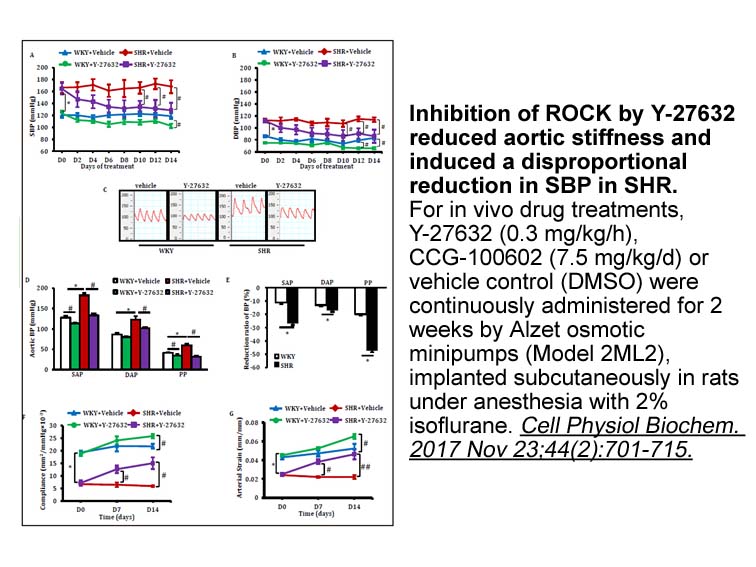
The Rho family of GTPases is composed of many small ubiquitous signaling G proteins that bind to guanosine triphosphate (GTP) and hydrolyze it to guanosine diphosphate (GDP). They act as switches: when binding to GTP, they are active and associate with a variety of target proteins that regulate intr
-
To identify genes with significant expression differences we
2022-03-22
To identify genes with significant Protease Inhibitor Library sale differences, we performed differential gene expression analysis between the two individuals with TRRAP variants (combined as biological replicates) and two unaffected controls. Gene ontology (GO) enrichment analysis of these genes w
-
Fig C presents the secondary structure arrangement
2022-03-22

Fig. 1(C) presents the secondary structure arrangement of the PAS-A and PAS-B domains in both HIF-2α and ARNT. The common scaffold of the PAS domains is a β sheet with numerous flanking α helixes. The PAS-A domains of both HIF-2α and ARNT have A’α, Aβ, Bβ, Cα, Dα, Eα, Fα, Gβ, Hβ, and Iβ from the N t
-
Upon LPS stimulation ERK and STAT signaling pathways were
2022-03-22
Upon LPS stimulation, ERK and STAT3 signaling pathways were activated in a time-dependent manner, and the phosphorylation of Y705 occurred later than that of S727 (Supplementary Fig. S5B). STAT3 is known to be phosphorylated on serine 727 (S727) by the mitogen-activated protein (MAP) kinase pathway
-
Introduction Hepatocellular carcinoma HCC is the
2022-03-21

Introduction Hepatocellular carcinoma (HCC) is the fifth most lethal malignant tumor worldwide and is the second leading cause of cancer-related death [1]. For HCC patients, mu opioid receptor virus (HBV) infection is the important causative risk factor in Asia-Pacific regions [[2], [3], [4]]. In C
-
In the present study we aimed to investigate the
2022-03-21
In the present study, we aimed to investigate the effect of a common dairy and beef genetic background on the mRNA SB 290157 trifluoroacetate salt of the AdipoQ system and GPR109A in different adipose depots and liver. Materials and Methods Results Comparing fat masses between families (fat-
-
Moreover we revealed that alanine and taurine a
2022-03-21
Moreover, we revealed that β-alanine and taurine, a structural analog of β-alanine, have different receptor affinity in the SG neurons of the spinal dorsal horn. Additionally, previous studies indicate that taurine regulates nociceptive information at the spinal cord level, and we have previously de
-
br Conclusion In conclusion SHP was demonstrated as a potent
2022-03-21
Conclusion In conclusion, SHP289-04 was demonstrated as a potent glucokinase activator. It could normalize the blood glucose level and lipid level in spontaneous type 2 diabetes model KKAy mice. At the same time, it ameliorated the function of islets and liver in KKAy mice. It had been proved to
-
br The actions of GLP on the vasculature
2022-03-21
The actions of GLP-1 (9–36) on the vasculature/endothelium The previous sections have ascribed the vascular and/or endothelial actions of GLP-1/GLP-1R agonists to potential direct actions through a canonical GLP-1R, but as mentioned previously, whether VSMCs and ECs express a full-length GLP-1R r
16221 records 476/1082 page Previous Next First page 上5页 476477478479480 下5页 Last page